

- Posted on
- In Blog, Hemp News
- Leave a comment
Major Sports Leagues Updated Cannabis Policies in 2024
In 2024, major sports organizations took significant steps to revise their cannabis policies as legalization continued to expand across the United States. With increasing pressure to align with state-level reforms and changing public perception, leagues such as the NFL, NCAA, and UFC introduced key changes that reflect the evolving stance on cannabis use in athletics.
Key Revisions in Sports Policies
One of the most notable updates came from the National Football League (NFL). In December, the NFL finalized a new agreement with its players union to increase the THC threshold for positive tests from 150 ng/ml to 350 ng/ml. Additionally, penalties for positive tests were significantly reduced:
- First offense: $15,000 fine (previously a half-game fine).
- Second offense: $20,000 fine.
- Third offense: Loss of full-game pay.
- Fourth offense: Two-game pay fine.
This policy builds on earlier reforms made in 2020, when the NFL stopped suspending players for cannabis use.
Meanwhile, the National Collegiate Athletic Association (NCAA) voted in June to remove marijuana from its list of banned substances for Division I athletes. The policy emphasizes that cannabis is not a performance-enhancing drug and should be treated similarly to alcohol. This rule change also retroactively absolves athletes from any ongoing cannabis-related penalties.
Significant Policy Shifts in 2024
Several other important cannabis policy updates occurred throughout 2024, reflecting the growing acceptance of cannabis use in professional and collegiate sports:
- Nevada Protects Athletes from Cannabis Penalties: In October, the Nevada State Athletic Commission (NSAC) formally adopted a rule protecting professional fighters from penalties related to state-legal cannabis use. This policy, which had been informally applied since 2021, ensures that athletes using cannabis legally in Nevada will not face anti-doping violations.
- NBA and WNBA Partner with CBD Brands: Early in the year, the Brooklyn Nets and New York Liberty announced partnerships with Mynd Drinks, a CBD beverage company. This marked the first time teams in the NBA and WNBA collaborated with a cannabis-related brand, signaling a growing acceptance of non-intoxicating cannabinoids in professional sports.
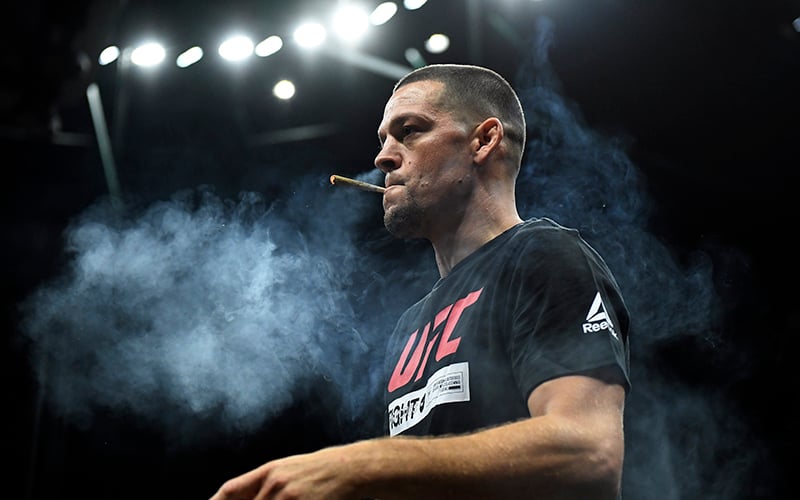
- UFC Cannabis Warning in California: Despite revising its league-wide cannabis policy in 2023, UFC reminded fighters competing in California that the state’s athletic commission still imposes fines for positive THC tests above 150 ng/ml. This highlights the ongoing challenges of navigating differing state and league regulations.
Ongoing Research and Legal Challenges
In addition to policy reforms, 2024 saw increased investment in cannabis research by sports organizations. The NFL, for instance, partnered with Canadian researchers on a clinical trial to explore the safety and efficacy of CBD for pain management and neuroprotection. The trial, involving 35 participants, aims to determine whether CBD can serve as a safe alternative to opioids for managing pain.
However, not all changes were progressive. In July, the NFL and Denver Broncos filed a motion to dismiss a lawsuit brought by a player who alleged discrimination over his use of a prescribed synthetic cannabis medicine. The league defended its policy by arguing that cannabis use can lead to “on-field injuries, diminished job performance, and alienation of fans.”

Broader Implications for Sports and Cannabis
These policy changes and research initiatives reflect a growing shift in how cannabis is perceived within the sports world. The evolving stance on cannabis use highlights a broader societal shift towards acceptance and normalization of the plant.
At the international level, however, restrictions remain. During the 2024 Paris Olympics, U.S. Anti-Doping Agency (USADA) CEO Travis Tygart criticized the World Anti-Doping Agency’s (WADA) continued ban on cannabis for international athletes, calling it “unfair.” USADA had previously urged WADA to reconsider its stance after the high-profile suspension of U.S. runner Sha’Carri Richardson in 2021. Despite the backlash, WADA has maintained its ban, citing concerns over athlete safety and performance.
Looking Ahead to 2025
As legalization continues to spread across the U.S. and globally, it’s likely that more sports organizations will reevaluate their cannabis policies. With growing evidence supporting the therapeutic potential of cannabis and cannabinoids like CBD, leagues are under increasing pressure to adopt evidence-based policies.
2024 marked a pivotal year for cannabis policy in sports. The developments signal a move toward a more balanced and informed approach to cannabis use, benefiting athletes and reflecting broader societal trends. As we head into 2025, the continued evolution of these policies will be something to watch closely.




No comment yet, add your voice below!