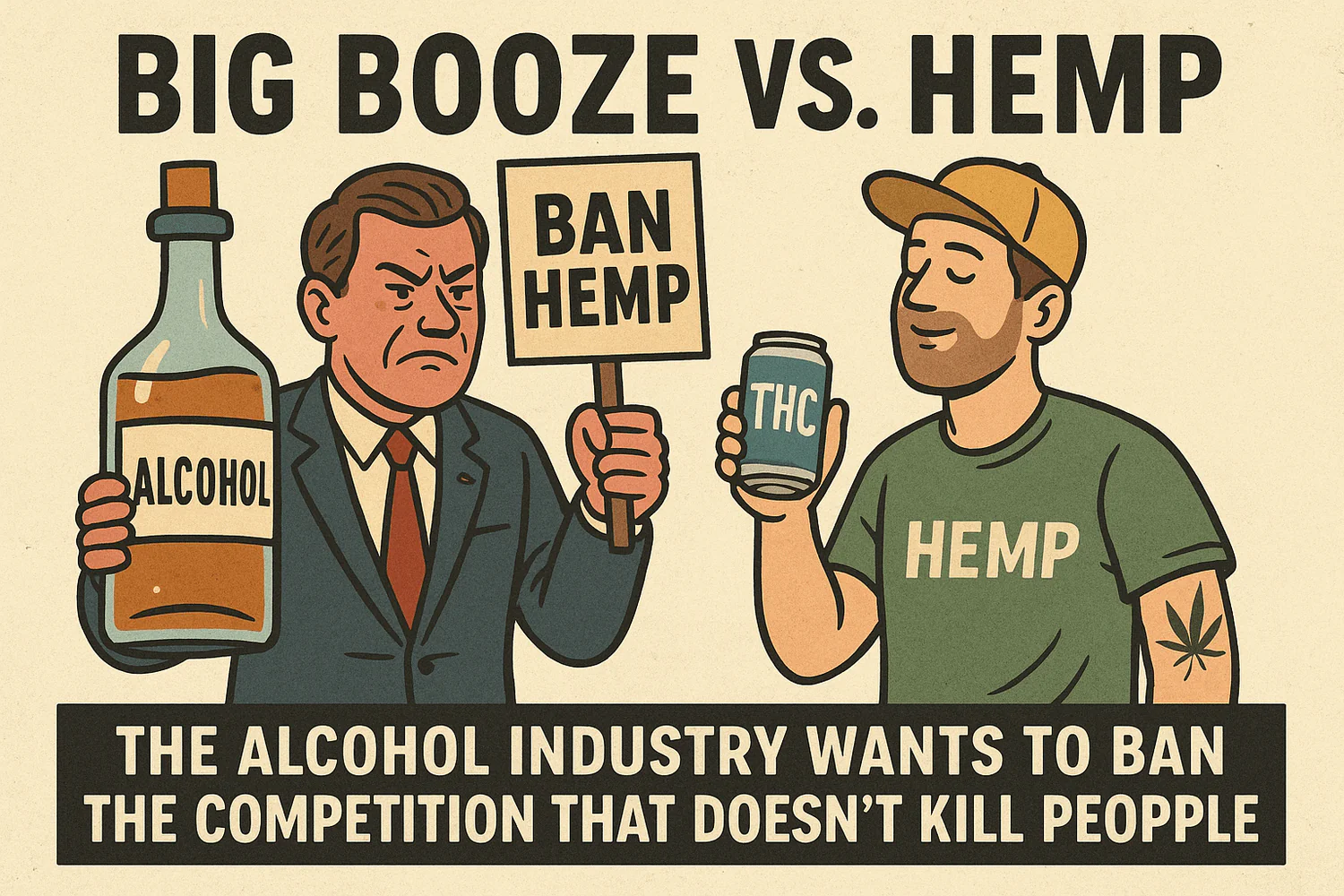
Alcohol & Marijuana Lobbies Pushed The Hemp-THC Ban

Rand Paul Says Alcohol & Marijuana Interests Teamed Up Against Hemp

On a recent podcast appearance, Sen. Rand Paul (R-KY) said parts of the alcohol industry and segments of the state-licensed marijuana industry aligned to push a federal crackdown on hemp-derived THC products. His view: hemp’s ability to be sold across state lines—and to reach customers nationwide—has threatened established business models built around state borders and high fees.

We’re not here to pick sides. Our focus is access: keeping safe, clearly labeled, lab-tested hemp options available and affordable for consumers who rely on them.

This Isn’t Left vs. Right—It’s Access vs. Gatekeeping

Policy fights often come down to who can sell what, where, and under which rules. Hemp was federally legalized in 2018, allowing compliant products to move across state lines. Some state cannabis operators—who can’t ship products out of their state—and alcohol interests reportedly want tighter limits on hemp to preserve state monopolies, fee structures, and tax revenues. Consumers can get lost in the middle.

  • Hemp = federally legal, interstate shipping allowed (within state laws), typically lower cost.
  • State marijuana = legal only within each state, no interstate commerce yet, higher compliance fees/taxes.
  • Recent proposals would cap “total THC” per container at levels so low that most current products would vanish.

Quick Facts for Consumers

  • Hemp products must meet federal definitions and state rules; reputable brands provide full COAs and precise dosing.
  • Well-made hemp products are already helping millions with relaxation, sleep, and everyday recovery—without a bar tab.
  • Most proposed bans don’t distinguish between unsafe, unlabeled products and compliant, transparent brands.

Related reads: First Month Free THC & CBD Subscription • THC Numbers vs. Real Impairment • Fewer Americans Plan to Quit Cannabis in 2026

Watch the Segment

Senator Paul’s comments begin around the 45-minute mark. We encourage you to hear the full context and decide for yourself:

Key takeaway (paraphrased): hemp’s national reach challenged state-bound models, prompting unusual alliances to restrict it. Our view: regulate smartly; don’t erase access.

Our Promise: Accessible, Affordable, Transparent Hemp Care

Workman’s Relief supports consumer-first regulation: age gates, accurate labels, contaminant testing, and honest dosing. We don’t support blanket bans that remove helpful products from responsible adults. We remain politically neutral and firmly pro-access—because your wellness shouldn’t depend on a ZIP code or a lobbying war.

  • Always check COAs, batch numbers, and serving sizes.
  • Choose reputable brands with clear testing and responsible formulations.
  • Speak up: constructive, science-based rules protect consumers without wiping out options.

We’ll keep showing up for quality, safety, and access—so you can choose what works best for you, not what works best for a special interest.

Our Recommendations//

How Big Alcohol Spins CHS Into a Panic: Facts, Not Fake News

CHS In The Headlines: What It Is—And What It Isn’t

Over the last few weeks, you’ve probably seen alarming segments about Cannabinoid Hyperemesis Syndrome (CHS)—a real, uncommon condition seen mostly in heavy, long-term cannabis users. It’s now got an official diagnostic code, which helps doctors recognize and study it. That’s good for patients and good for science.

But context matters. Emergency-department analyses put CHS at a small fraction of overall visits—on the order of dozens per 100,000, not an avalanche. For most adults using responsible doses, especially edibles and low-dose beverages, risk appears low. We’ll walk you through the numbers, the media spin, and how to think clearly about it.

What Solid Data Actually Shows

Prevalence: A JAMA Network Open analysis reported CHS-coded visits around ~33 per 100,000 ED visits at peak measurement—noticeable, but rare in the big picture.

Risk group: Clinicians most often see CHS in people using high-potency THC multiple times per day for years. Casual or occasional consumers rarely match that profile.

Course & care: Providers look for a consistent cluster of symptoms and rule out more common causes. The typical plan is supportive care and, when appropriate, pausing high-frequency THC use. If you ever experience persistent, severe GI symptoms, seek medical care—don’t self-diagnose.

“Rare doesn’t mean imaginary. It means we need proportionate, honest communication.”

How A Rare Syndrome Became A Prime-Time Scare

Newsrooms went heavy on shock and light on denominators. See examples:

  • Fox 8 explainer leans on dramatic framing more than base rates.
  • CNN feature popularized a lurid nickname that wasn’t coined by clinicians.
  • Fox News piece highlights a “surge” yet offers little clarity on absolute risk or the heavy-use cohort driving most cases.

The result? A rare condition is packaged as a sweeping crisis—exactly the kind of distortion that breeds confusion, fear, and bad policy.

Why This Narrative Is Convenient For Big Alcohol & Big Pharma

Follow the incentives. Major drugmakers and alcohol trade groups spend heavily to shape public opinion and policy. Reports have pointed to multi-billion-dollar pharma ad buys across cable news. Lobbying records show alcohol and pharmaceutical firms regularly weighing in on cannabis rules.

At the same time, new consumer research (and our own customer feedback) suggests some adults are substituting low-dose THC beverages and gummies for a portion of their alcohol intake—see our breakdown here: THC Drinks & Gummies vs. Alcohol.

None of this “proves” a coordinated campaign. But it explains why a rare cannabis-related issue would get outsized airtime—especially when cannabis competes with pills and pours.

Clear-Eyed Guidance & Where We Stand

  • Use patterns matter: The highest observed risk is in very frequent, high-potency consumption. If that describes you, consider a tolerance break, lower-dose formats, or spacing use.
  • Start low, go slow: Especially with edibles and drinks—dose thoughtfully and give products time to take effect.
  • Listen to your body: Persistent or severe GI symptoms? Get evaluated by a qualified clinician. Don’t try to “push through.”
  • Stay informed: For policy context that’s also heating up, see Wisconsin Hemp on Edge and our educational pieces for older adults: Why More Seniors Are Reaching for Cannabis.

Workman’s Relief is on the side of truth. CHS exists—and we acknowledge it. But based on current evidence, it affects a small percentage of the most frequent, high-potency consumers. We’ll keep advocating for proportionate, science-first conversations while making products designed for responsible, enjoyable use.

Educational content only; not medical advice. Speak with a healthcare professional about your individual situation.

Our Recommendations//