Charcoal Tips Strip Terpenes – Choose Gummies & Drinks Instead

Charcoal Filters Promise “Cleaner Smoke.” The Chemistry Says Otherwise.
Activated charcoal sounds clinical and safe. It’s the same stuff in air purifiers and respirators, so the pitch is easy: drop a tiny carbon capsule on your joint and—presto—“cleaner smoke.” The reality is less magical. Charcoal is engineered to grab volatile compounds. In smoke, that means the fragrant aromatics that make flower taste like itself. You’ll often feel a softer draw, sure—but you’ve also stripped away a lot of the character that makes good cannabis worth lighting in the first place.
For bigger context on how cannabis stacks up against alcohol and why many consumers are moving to non-smoked formats, see THC Drinks & Gummies vs. Alcohol: What New Research Actually Shows, our athlete recovery deep-dive CBD & Elite Athletes: Better Sleep, Relaxation & Recovery (2025 Study), and our media-literacy piece How Big Alcohol Spins CHS Into a Panic: Facts, Not Fake News.
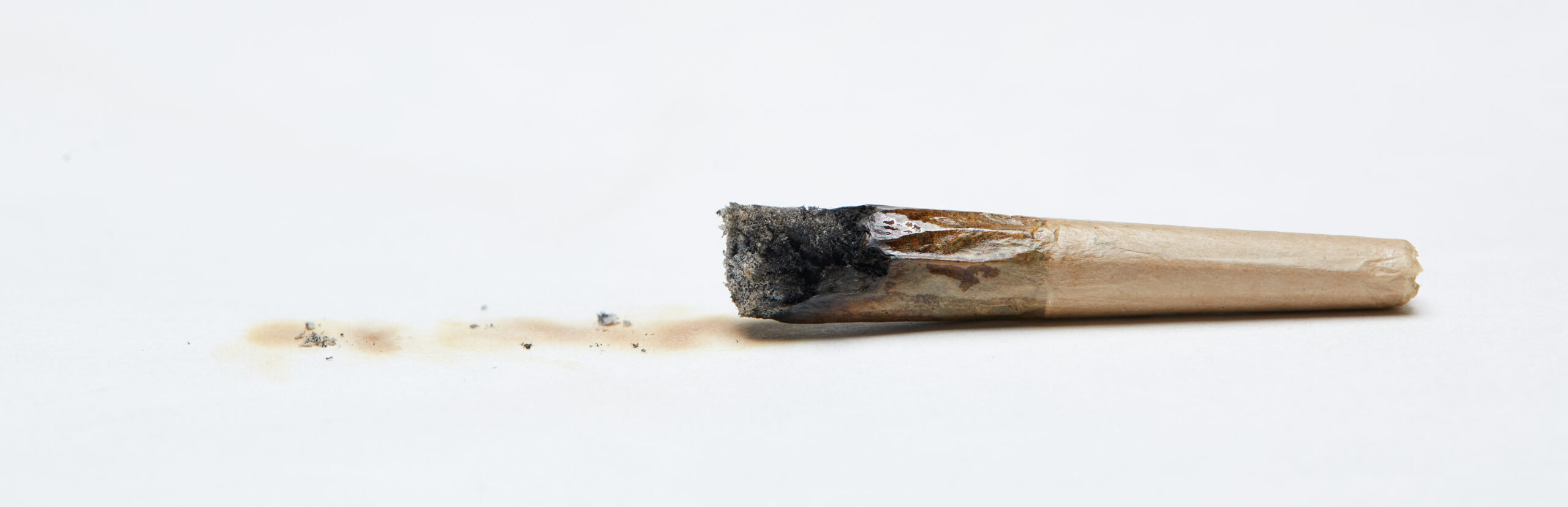
What Peer-Reviewed Studies Actually Found
Most of the hard data on charcoal filters comes from tobacco research, but the mechanics of smoke are similar. Two key findings keep showing up:
- Charcoal slashes gas-phase toxins. In a study on cigarette filters, adding charcoal reduced gas-phase free radicals by roughly 70–88% while doing much less to the particle side of smoke. Read it here: Effect of Charcoal in Cigarette Filters on Free Radicals in Mainstream Smoke.
- Specific reactive gases drop, but particulates remain. Another paper showed 73–80% reductions in p-benzosemiquinone (a reactive gas-phase compound) with activated charcoal filters—yet particulates that carry nicotine (and by analogy, much of THC) were far less affected. Details: Activated charcoal filter effectively reduces p-benzosemiquinone….
Translation: charcoal is very good at grabbing gases. It is far less effective at capturing the particles where much of the active payload rides.

Why Flavor Drops First (and the High Feels Flatter)
Terpenes—the citrus, pine, fuel, and floral notes that cue your brain—are volatile aromatics. They live largely in the gas phase of smoke. Charcoal loves those. So the filter “smooths” the draw, but it also strips out a chunk of the bouquet. THC, by contrast, tends to travel on tarry particles; charcoal removes some of it, but not nearly as aggressively as it removes aroma. The net effect many people notice: less irritation, less flavor, and a simpler, less dimensional high.
That’s not placebo—it’s basic adsorption physics. If you value strain expression and entourage effects, a charcoal filter works against your goals.
About That “Reduces Tar” Claim
“Tar” isn’t a single toxin; it’s a lab bucket for all particulates except water and nicotine (or THC in cannabis). Because charcoal primarily removes gases, not particles, “reduced tar” is often more marketing than math. And here’s the kicker: if a filter meaningfully cut particulate tar, it would also cut the active you’re after—since that active mostly rides with the particles.
So are charcoal tips useless? Not exactly. If your top priority is a gentler draw and fewer reactive gases, they can help. If your priority is full flavor and effect fidelity, they’re a tax on the experience.

The Practical Move: Skip Combustion When You Can
If your goal is cleaner inputs and consistent effects, the most evidence-based move is to avoid smoke altogether. Gummies and beverages deliver precision, skip combustion byproducts, and keep the strain’s character intact without a filter stripping the good parts. We make both—thoughtfully dosed, third-party tested, and built for repeatable results.
Our Recommendations//