Minnesota’s Adult-Use Cannabis Market Is Live

Minnesota’s Adult-Use Cannabis Market Is Live — Why It Matters in Wisconsin

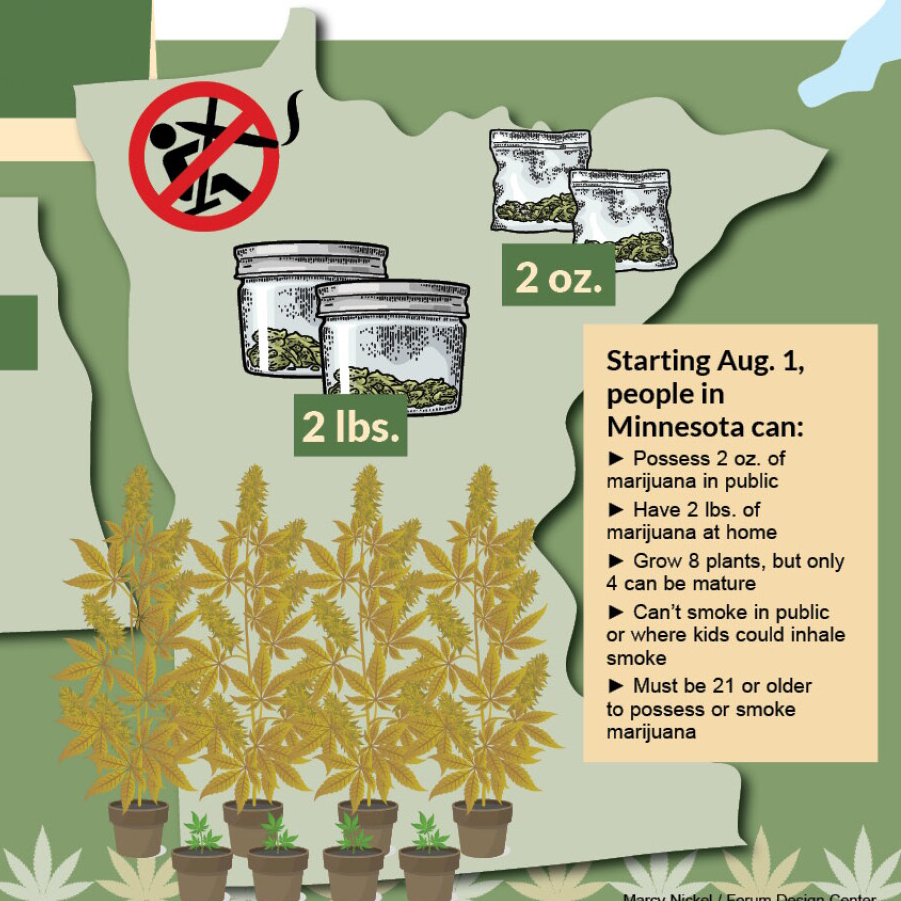
Our neighbors to the north-west just crossed a major milestone: Minnesota’s first non-tribal adult-use cannabis retailers have opened their doors. This launch follows two years of rulemaking after legalization, as medical dispensaries and newly licensed shops transition to serve both patients and adult consumers. The Office of Cannabis Management (OCM) says it will closely monitor supply, labeling, and age-verification as the market scales up, and more stores are expected to come online over the next several weeks.

From a Wisconsin perspective, the geography matters. Several Minnesota communities near our shared border are allowing adult-use retail, so Badger State residents may see more cross-border travel for tourism, events, and shopping. Early markets typically bring longer lines, evolving menus, and frequent regulatory updates—so plan ahead, check store hours, and confirm inventory before you drive.

Want a snapshot of where adult-use stores are appearing? The Star Tribune maintains a helpful locator you can bookmark: Map: See where you can legally buy marijuana in Minnesota. We’re cheering on our neighbors and the businesses working hard to launch responsibly.

Border Basics: What Minnesota’s Launch Does—and Doesn’t—Change

Even with Minnesota open for adult-use sales, the broader legal landscape still matters. State legalization does not override federal or out-of-state laws. That means Wisconsin residents who travel to Minnesota should follow common-sense guidelines: purchase only from licensed retailers, carry a valid ID, comply with purchase limits and local rules—and most importantly, do not transport cannabis across state lines. Use and possession must follow Minnesota law while you are physically in Minnesota.

Banking, taxes, and interstate commerce are also shaped by federal policy. A potential move of cannabis to Schedule III could ease certain tax burdens for licensed businesses, but it would not equal nationwide legalization or automatic pharmacy distribution. If you want a plain-English primer on what rescheduling would—and would not—do, we’ve got you covered here: Cannabis Rescheduling: What It Is—and What It Isn’t.

Bottom line for cross-border visitors: read posted store policies, keep purchases sealed until you’re at your destination, and follow local consumption ordinances. Responsible, informed choices help new markets thrive.

Wellness Angle for 2025: Hemp-Derived CBD Research Worth Watching

While adult-use cannabis rolls out in Minnesota, many Wisconsinites continue to explore hemp-derived options that fit their routines. Two recent science reads stand out. First, preclinical work from UC San Diego suggests CBD may help reduce alcohol-withdrawal symptoms and relapse-like behaviors while showing neuroprotective signals—an early but interesting direction if you follow harm-reduction research. Read the summary: CBD May Reduce Alcohol Withdrawal & Relapse Risk, UCSD Study Finds (2025).

Second, for skin health, a comprehensive review highlights CBD’s anti-inflammatory and antioxidant properties alongside formulation advances aimed at improving topical delivery. It’s a balanced look at where evidence is promising—and where larger human trials are still needed. Dive in here: CBD & Skin: What the Latest Science Actually Says.

As policy and science evolve, we’ll keep covering updates that help Wisconsin readers make informed, responsible choices. If the regulatory picture is part of your decision-making, don’t miss our neutral overview above—and congrats again to Minnesota on a safe, community-minded launch.

Cannabis Rescheduling: What It Is—and What It Isn’t

Disclosure: We are not a medical marijuana company. Our products are Farm Bill–compliant hemp products.

Federal officials have recently signaled that they’re evaluating whether to move cannabis from Schedule I to Schedule III under the Controlled Substances Act (CSA). This Wellness Wednesday, we’re keeping it neutral and practical: what “rescheduling” could change, what it likely won’t, and how to think about next steps for consumers and businesses. Quick refresher—under the CSA, Schedule I drugs are deemed to have no accepted medical use and a high potential for abuse; Schedules II–V include substances with recognized medical uses and varying abuse potential.

State laws will continue to matter a lot. If you operate or purchase in places with evolving hemp rules, our legal explainer is a helpful companion read: 2025 Texas THC & CBD Laws, Is it Legal in TX Today?

Myths vs. Reality: A Quick Guide to Potential Schedule III

Claim What Rescheduling Would Likely Do What It Would Likely Not Do
“Cannabis will be fully legal nationwide.” Acknowledge accepted medical use at a federal level (Schedule III). Not full legalization. State programs remain distinct; federal law still applies.
“State markets can ignore federal rules.” No—states still operate within federal constraints unless Congress changes statutes. Does not grant states alcohol/tobacco-style autonomy. That would require descheduling, not rescheduling.
“Cannabis will become an FDA-approved prescription only.” Schedule shift recognizes medical use category. Does not automatically turn state-program products into FDA-approved medicines or pharmacy-only items.
“280E taxes go away.” Yes—moving off Schedule I removes §280E limits so licensed businesses could take ordinary deductions. Does not by itself fix banking/insurance; further legislation (e.g., SAFER Banking) would still help.
“Research will suddenly be easy.” Some barriers soften conceptually with Schedule III status. Many marijuana-specific hurdles are baked into separate rules; Congress/agency updates still needed.
“All penalties disappear.” Schedule-I-specific collateral issues (e.g., certain restrictions tied to Schedule I status) may ease. Criminal statutes for marijuana possession/trafficking do not auto-change—Congress must act.

If you’re following the health science as policies evolve, our recent research brief is a solid primer: CBD May Reduce Alcohol Withdrawal & Relapse Risk, UCSD Study Finds (2025). For readers focused on wellness and recovery, it outlines early evidence in plain language.

What to Watch Next—and How to Stay Grounded

Rescheduling to Schedule III would be a meaningful shift in federal posture, especially for taxes and stigma, but it would not instantly unify state programs or turn today’s products into FDA-approved prescriptions. Expect a period of transition where Congress, agencies, and states clarify rules on banking, insurance, interstate commerce, research sourcing, and labeling. In the meantime, consumers should keep verifying age limits, local compliance, and lab testing—regardless of federal moves.

For those tracking cannabis and public health (including veterans’ issues), bookmark this evidence roundup: Cannabis, PTSD, and Veterans: What New Research Suggests. We’ll continue to cover policy and science neutrally—focused on health for all Americans and clear, responsible information.